

Ceremonial Breathwork Explained: The 3-Minute Technique Melissa Terese Uses to Reset Her Nervous System
Nov 24, 2026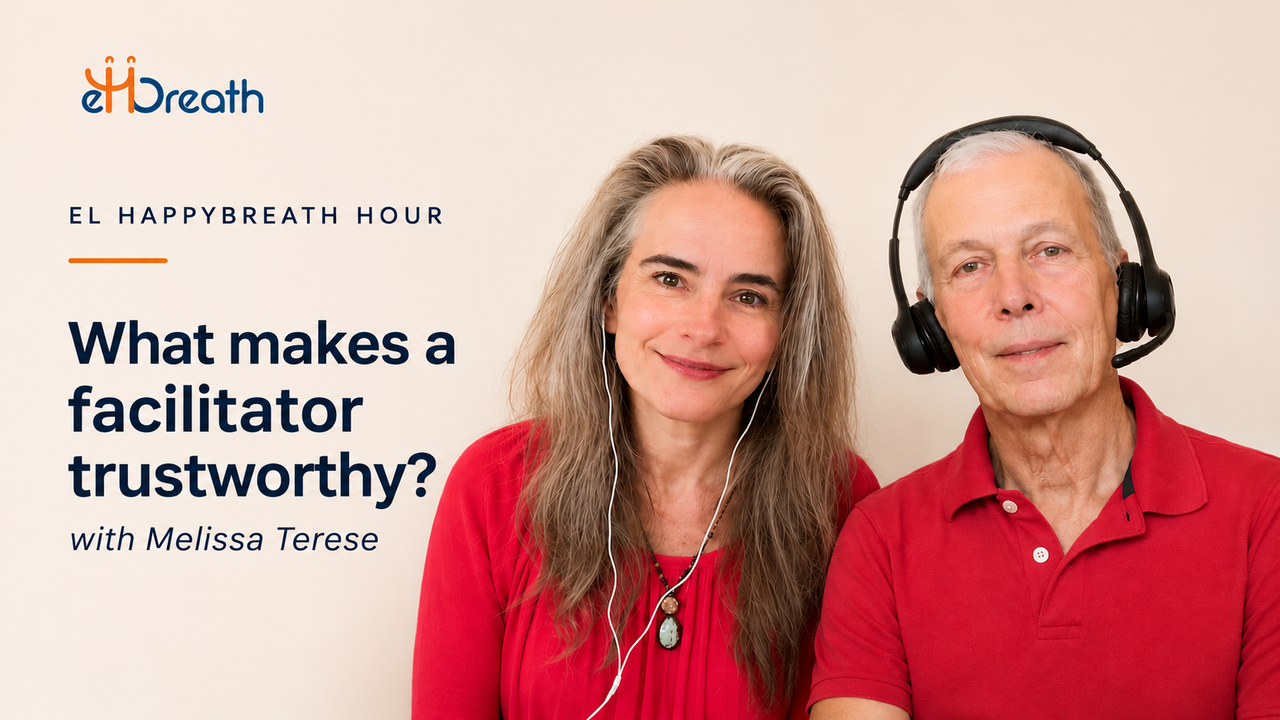
Ceremonial breathwork is a guided breathing practice that uses the breath to help shift the nervous system from stress toward a more restful state. It needs no special equipment. Just your breath and a few minutes of focused attention.
On a recent episode of the el HappyBreath Hour, Roberto Suárez sat down with ceremonial breath guide Melissa Terese, founder of Breathwork Worldwide. They talked about what the practice involves, how to vet a facilitator, and a simple breathing pattern you can try in under three minutes.
In this article:
- Why Melissa took the "work" out of breathwork
- The breath session that changed the direction of her life
- What to ask before you trust a facilitator
- The 3-minute breathing pattern she calls her go-to
Why Melissa Took the "Work" Out of Breathwork
Melissa didn't set out to build a career around breath. She studied at Emerson College in Boston, interned on The Tonight Show, and worked for Jay Leno for six years. Later she moved into the music industry as a coordinator. Breath came into her life much later.
Today she calls herself a non-suffering breath facilitator. To her, the word "work" carries the idea that growth has to be hard. She'd rather it wasn't.
"Aren't we tired of the hard? Aren't we tired of the suffering?"
So she stopped saying breathwork. She offers ceremonial breath, a breath practice instead of a breath work practice. The breath, she says, "can be very powerful but really gentle."
Roberto knows the naming problem well. His brand started out as "breath play," a way to play with the breath instead of working at it. Then someone told him to look up the phrase on Google before taking it into the corporate world. One search was enough. That's part of how el HappyBreath was born.
He made another shift too, from "happy coach" to el HappyBreath. As he put it on the show, it wasn't him doing the work. It was the breath. Melissa agreed:
"I will breathe with you. I can't breathe for you."
Roberto's own definition of the practice is simple. The breath is the intelligence of your body, and a guide's job is to help you listen to it.
The Breath Session That Changed Everything
Nobody grows up planning to be a breath facilitator. Melissa's path started in what she calls her "dark night of the soul." Her marriage was falling apart, she didn't feel like a good mom, and she got sick after the Porter Ranch gas leak.
She ended up in Sedona, Arizona, at a retreat called Sedona Soul Adventure. It mixed Reiki, massage, and other sessions she didn't fully understand before she arrived. One of them was breathwork. She had never heard of it.
That same morning, she had pulled her back out. She couldn't touch her toes.
"I go into the breath work session, cannot even touch my toes... it was about an hour session, I think maybe 90 minutes, did the breath pattern and like a chiropractic adjustment is the best way I could describe it... I actually experienced a physical healing in that breath session, like stand up, touch my toes."
She calls it her "Jesus moment." She is also clear that it wasn't instant. It took the next couple of weeks for her to understand what had happened. What stayed with her was a belief that people can play an active part in how they feel when someone holds the space for them.
That shapes how she sees her role today. She doesn't call herself a healer. She calls herself a guide who offers an opportunity.
How to Vet a Breathwork or Plant Medicine Facilitator
Melissa guides both breath and plant medicine ceremonies, and her advice on choosing a facilitator is the same for both. She is direct about it. Some of this world runs on mystery, with the hint that you shouldn't ask too many questions. She sees that as a warning sign.
"That's not the type of shaman I actually want to be sitting with... I don't want the mysterious spaceholder."
Before you sit with anyone, she suggests asking:
- Who did they train with?
- How long have they been doing this?
- How many people have they sat with or guided?
- Where does the medicine come from, if there is one?
- Is this a party-style experience, or something more contained?
None of these has one right answer. Even a party-style setting can be fine if you choose it with your eyes open. What matters is transparency. She compares it to choosing a doctor or a dentist. A good one will tell you how they trained and how long they've practiced.
"If they're not willing to share that information, run. Don't walk away from that facilitator."
She also stresses integration, the time you take after a session to let the experience settle into daily life. She often suggests at least two weeks, though it depends on the person. Some people come once and get exactly what they needed. Others come back every week.
Try It Yourself: The Vagus Nerve Breath
Melissa led this pattern with Roberto at the start of the episode. She calls it her go-to because it's fast. The aim is to help your body shift toward the parasympathetic nervous system, the part linked to rest and recovery.
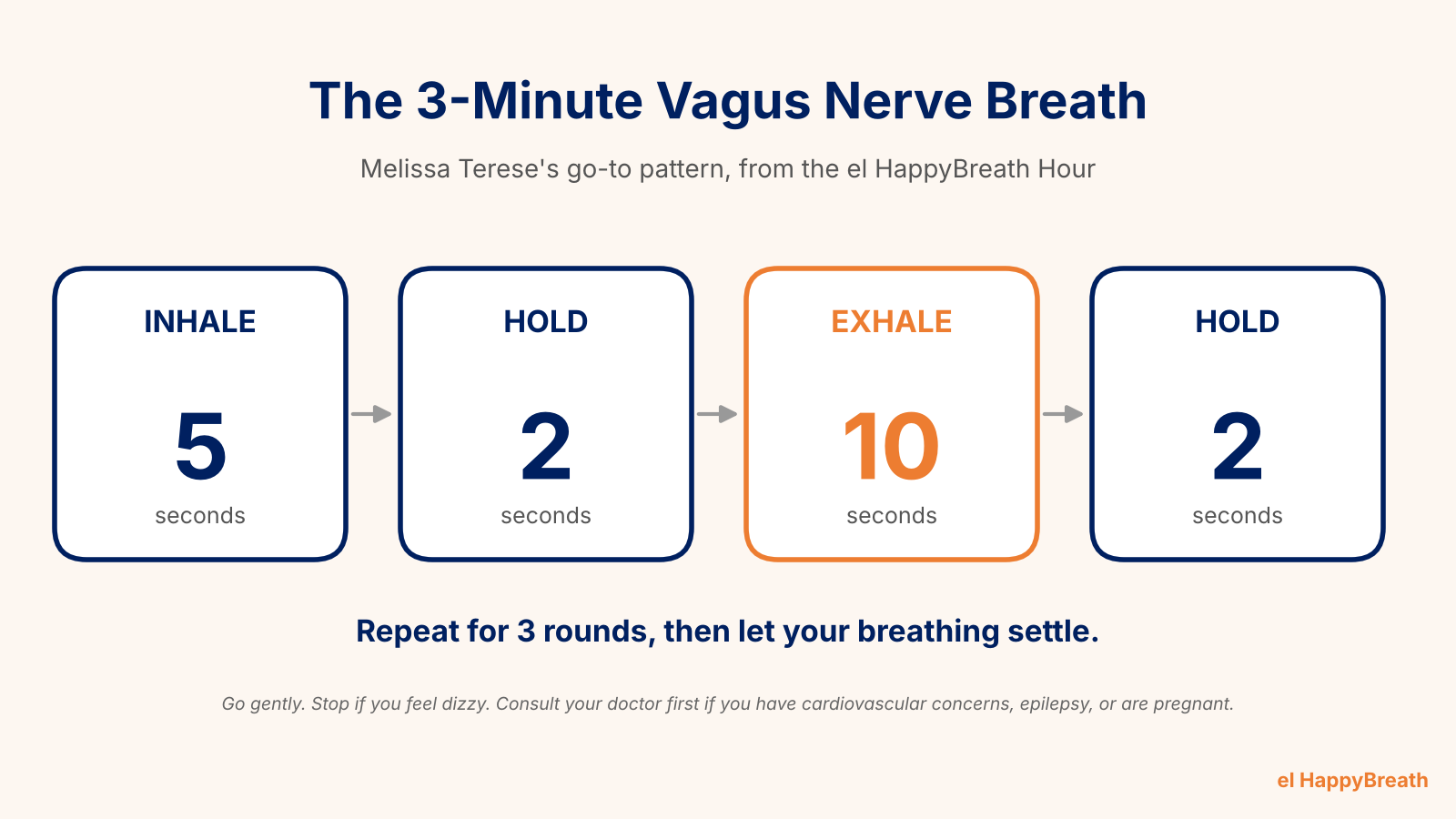
The pattern (3 rounds, under 3 minutes)
- Notice how you feel right now.
- Inhale for 5 seconds, through your nose or mouth.
- Hold for 2 seconds.
- Exhale slowly for 10 seconds, twice as long as the inhale.
- Hold for 2 seconds at the bottom.
- Repeat for 3 rounds, then let your breathing settle.
Go gently. Skip the holds or stop if you feel dizzy. Consult your doctor first if you have cardiovascular concerns, epilepsy, or are pregnant.
Afterward, Melissa says a yawn or a gurgling stomach can be signs that your body is moving into rest mode.
"This is my go-to. And I love it because it's fast."
Feeling Stuck Is Part of the Practice
Roberto asked Melissa what she would tell someone who feels stuck, going through the motions without feeling connected. She answered from experience. Her past year, she said, was one of feeling really stuck.
"My guidance would be learning how to surrender and that it's a practice."
Her second tip is practical. If a pattern stops working for you, try a different one. There are many breath practices, and each can take you somewhere new.
"Hey, maybe go do Wim Hof. You know, maybe go see Roberto. Maybe come see me. Go see Dan Brulé."
She also sees growth as a spiral, not a finish line. You get unstuck, and later you may feel stuck again. That isn't failure. It's the next lap.
Why Breathing Together Matters
For Melissa, the "ceremonial" in ceremonial breath is about community. She believes many of us were taught to separate, and that coming back together is part of how we feel whole again.
"When we all breathe together, when we all sit together in community... we're healing."
Roberto shares that vision. His dream is a world that breathes happy and free, one breath at a time.
Where to Find Melissa
Melissa offers ceremonial breath sessions, circles, and facilitator training through Breathwork Worldwide.
Website: breathworkworldwide.com
FAQ
What's the difference between "breathwork" and "breath work"?
There's no strict technical difference. Both describe guided breathing practices used for physical, emotional, or spiritual shifts. Some practitioners, like Melissa, drop the word "work" and say "ceremonial breath" or "breath practice" instead, to move away from the idea that growth has to be hard.
Is breathwork safe for everyone?
Most people can try a gentle pattern like the one above. Breathwork is not a substitute for medical or mental-health care. Consult your doctor first if you have cardiovascular concerns, epilepsy, or are pregnant, and work with a trained facilitator for deeper sessions.
How can I help my body shift into rest mode quickly?
A slow pattern with a long exhale is one commonly taught approach. Try inhaling for 5 seconds, holding for 2, exhaling for 10, and holding for 2, for three rounds.
How do I know if a facilitator is qualified?
Ask who they trained with, how long they've practiced, how many people they've guided, and where any medicine they use comes from. A facilitator who won't answer these questions directly is worth reconsidering.
Melissa said it herself: if one pattern stops working, try another, and maybe go see Roberto. If you're curious what working with Roberto could look like, start with a free 30-minute Discovery Call. No pressure, just a conversation about where you are and what you want to shift.
Breathe happy, live happy.
Breathwork is not a substitute for medical or mental-health care. Individual experiences vary.
Stay connected with news and updates!
Join our mailing list to receive the latest news and updates from our team.
Don't worry, your information will not be shared.
We hate SPAM. We will never sell your information, for any reason.