
The Weight We Carry: How to Breathe Away Stored Emotional Blockages
Aug 18, 2026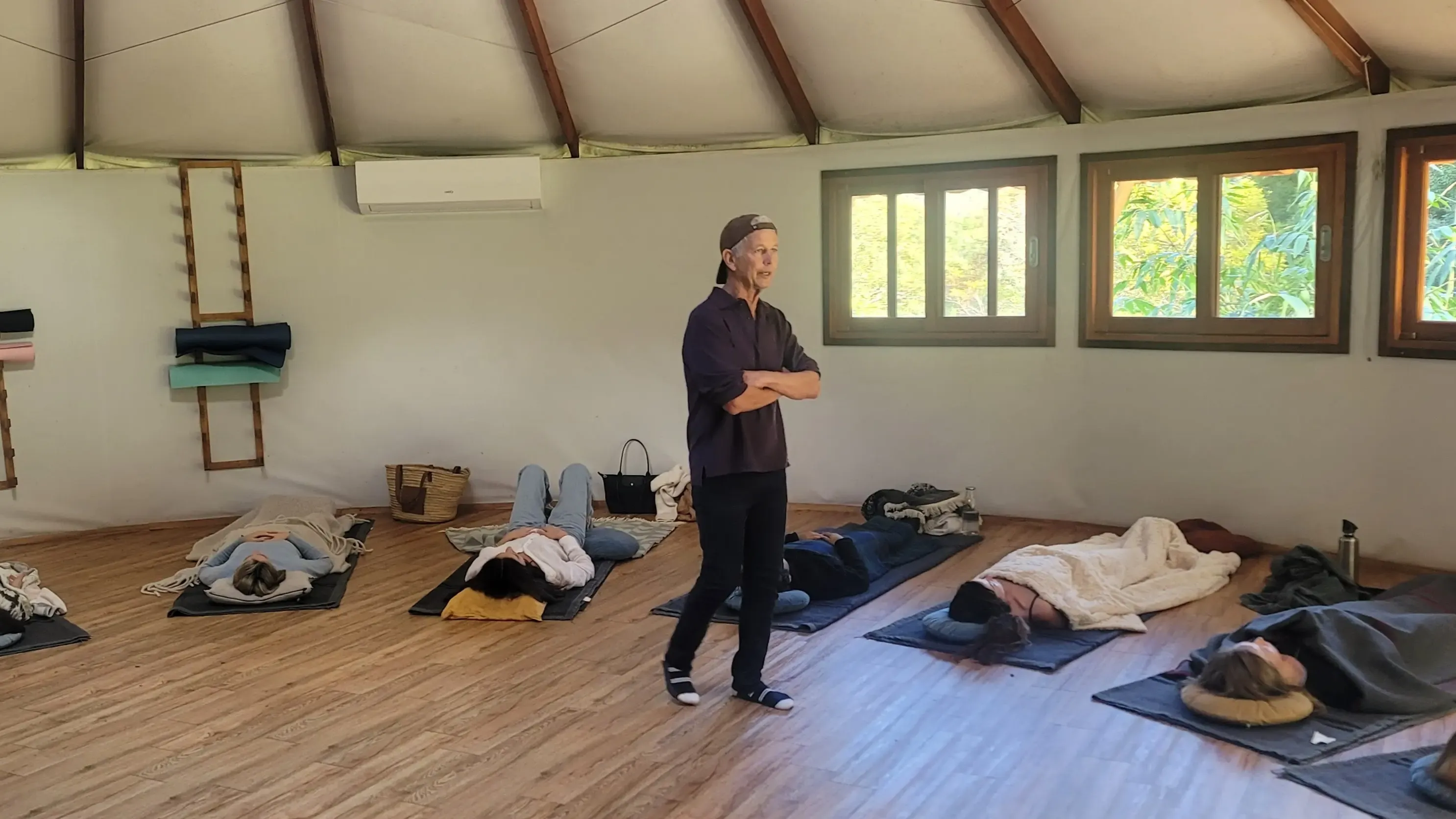
By Roberto, Founder of el HappyBreath
We're taught how to manage our accounts, our teams, and our schedules. Nobody teaches us how to manage our emotional residue. In the professional world, vulnerability still reads as a liability more often than not. So when stress, frustration, or anxiety hits during a meeting, a deadline, or a hard conversation, most of us do the same thing: we swallow it. We tighten our bellies, hold our breath, and push through.
Here's the part that doesn't get said enough: emotions are data. When that data doesn't get processed, it doesn't just disappear. Many people experience it physically, in the body. A heavy chest. An unexplainable knot in your stomach that shows up before a hard conversation. A creeping cynicism that wasn't there a year ago. You may not just be tired of your job. You may be carrying a backlog of pressure you've never had space to release.
Why Suppressed Emotion Doesn't Just Fade Away
Most of us were never taught that emotions have a physical lifecycle. A feeling arises, moves through the body, and if it's allowed to complete that cycle, it tends to resolve. Animals do this instinctively — a deer that narrowly escapes a predator will visibly shake afterward, discharging the stress response before returning to grazing a few minutes later.
Humans mostly skip that step. We feel the spike of stress or fear, and instead of letting it move through us, we clamp down. We hold our breath, brace our shoulders, tighten our stomachs. In the short term, that's a useful survival skill — it lets you stay composed in a meeting instead of visibly shaking. Over months and years, though, that same bracing pattern can become the body's default setting.
"It isn't imaginary, and it isn't a weakness. In my experience, it's unprocessed material the body is still holding, waiting for a route out."
This is why so many professionals describe feeling "fine" on paper while carrying a low hum of exhaustion, irritability, or flatness they can't quite explain.
How This Shows Up at Work
You've probably seen this play out without labeling it. A colleague snaps over something minor that clearly isn't about the minor thing. A normally warm manager goes quiet and distant for weeks with no obvious cause. You catch yourself dreading a meeting that, on paper, shouldn't be stressful at all.
These aren't character flaws or personality quirks. They can be the visible edge of a much larger backlog underneath — frustration from three projects ago that never got expressed, grief that got shelved because there wasn't time to feel it, anxiety about a decision that got buried under the next urgent task before it could be worked through.
That's part of why generic advice like "just relax" or "try not to stress about it" tends to fall flat. It's not that people don't want to relax. It's that the nervous system doesn't take instructions from willpower. It responds to physiological signals — and breath is one of the few signals you can consciously send it.
The Bridge Between Breathwork and Emotional Release
There's a long tradition within breathwork that treats the breath as a pathway into held emotional material. At el HappyBreath, we share that reverence for breath as an emotional release valve. Breathwork is not therapy and does not replace it. Our focus is tailored to meet busy professionals exactly where they are: an accessible way to shake loose that stagnation.
When you take part in the el HappyBreath practice, you change the rhythmic pattern of your breath in a way that can quiet the analytical, defensive part of the mind — the part that's usually working overtime to keep everything "under control." That gives the body room to do what it does best: let go of what it's been holding.
What Release Can Feel Like
As you breathe dynamically through a session, tension that's been held for months, or sometimes years, may start to shift. This doesn't always look dramatic. Sometimes it's a slow loosening in the shoulders. Sometimes it's a sudden wave of relief, an unexpected lightness, or tears that seem to come from nowhere in particular.
In my experience, that is not a malfunction. I've sat with clients through this many times, and people often describe it less as "fixing" something and more as finally putting something down that they didn't realize they were still carrying. Experiences differ from person to person, and no result is guaranteed.
A Grounded Way to Start Noticing This Yourself
You don't need a full session to start paying attention to this. Try this the next time you notice tightness building in your chest or stomach:
- Locate the sensation without judging it. Where exactly is it? Chest, throat, stomach? Just notice it as information, not as a problem to solve immediately.
- Breathe into that specific area. Instead of your normal breath, direct your inhale toward the tight spot, letting it expand slightly on the inhale rather than staying braced.
- Let the exhale be audible. A soft sigh or sound on the out-breath helps signal release rather than continued holding.
- Repeat for eight to ten breaths, staying with whatever sensation shows up rather than trying to think your way past it.
This is a gentle way to start feeling the difference between holding a feeling and letting it move. Stop if you feel dizzy or unwell, and speak to your doctor if you have a medical condition. It won't replace deeper guided work, but it's a place to start noticing where you've been bracing without realizing it.
Putting Something Down You Didn't Know You Were Carrying
Many people find that making room for what they've been holding also makes room for more joy, empathy, and resilience. This isn't only about becoming better at your job, though that may follow. It's about becoming a lighter, more available version of yourself — at work, at home, and in the moments in between.
You don't have to keep holding it all together by sheer force. For many people, a good place to start is something you're already doing every few seconds without thinking about it: your breath.
You'll probably still have a hard meeting next week, or a difficult conversation you've been putting off. That's not the part that changes. What may change is whether you're carrying last month's unprocessed weight into it too.
Key Takeaways
- Suppressed emotions can be held physically in the body when the natural stress-response cycle is interrupted — often showing up as tension, irritability, or fatigue.
- Breathwork offers a physiological pathway many people use to let go of held tension, by quieting the analytical mind that tends to keep people "stuck."
- Small, conscious breathing practices can be a gentle place to begin noticing your own patterns.
- A Breakthrough Session gives you a guided, 90-minute experience of this process with Roberto directly.
Frequently Asked Questions
Is this the same as therapy?
No. Breathwork isn't therapy or a replacement for it. Some people use it alongside professional support. Always talk to a qualified professional about your health.
Do I need experience with breathwork to try this?
Not at all. The simple practice outlined above is designed for complete beginners, and the Breakthrough Session is built as a first-time entry point.
How is this different from just "trying to relax"?
Relaxation on command asks your nervous system to respond to willpower. Breathwork sends it a direct physiological signal, which is why many people find it works where "just relax" advice doesn't.
Roberto Suárez
Founder of el HappyBreath. Roberto has guided thousands of people through breathwork over 30 years of daily practice. He leads private Breakthrough Sessions, group breathwork, and the 12-week transformation program in Miami and online with clients worldwide.
Book your $197 Breakthrough Session →
More from the Journal.
Stay connected with news and updates!
Join our mailing list to receive the latest news and updates from our team.
Don't worry, your information will not be shared.
We hate SPAM. We will never sell your information, for any reason.